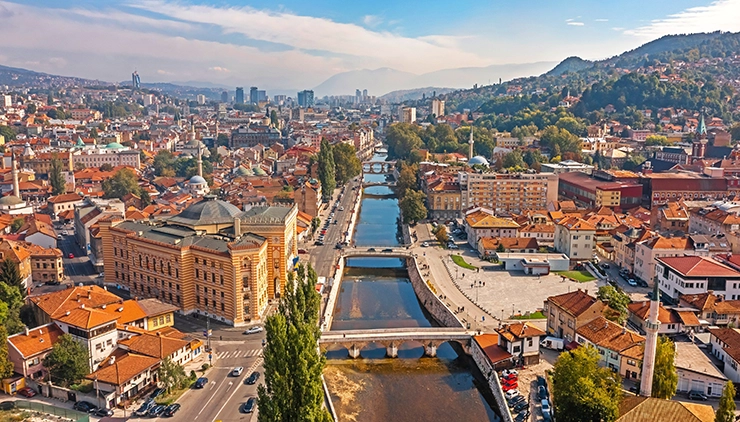
Complete Guide to Bosnia and Herzegovina Clothing
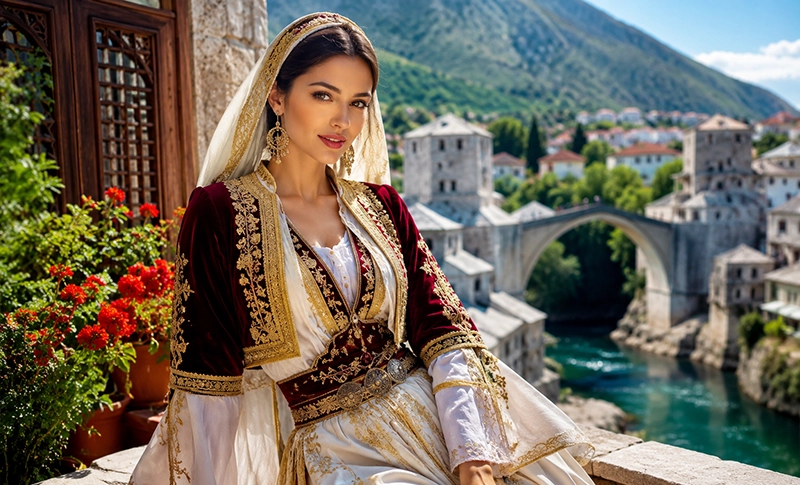
Bosnia and Herzegovina has a rich textile heritage shaped by centuries of cultural exchange between the Balkans, the Ottoman Empire, and Central Europe. Traditional clothing from the country reflects regional identity, craftsmanship, religious customs, and practical needs while showcasing intricate embroidery, natural fabrics, and distinctive accessories. Although modern fashion has become dominant in everyday life, national dress remains an important symbol of cultural pride and is frequently worn during festivals, weddings, folklore performances, and historical celebrations. Exploring Bosnia and Herzegovina clothing offers fascinating insight into the country’s diverse traditions and artistic heritage.
Men’s Traditional Clothing in Bosnia and Herzegovina
Čakšire
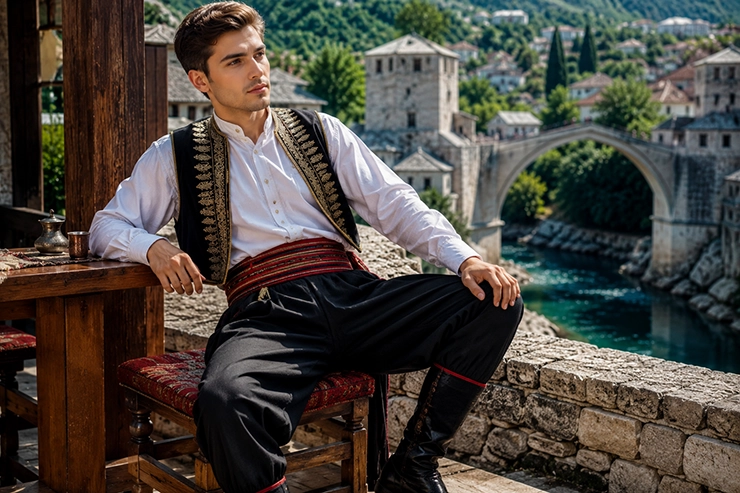
Čakšire are traditional men’s trousers that have long been associated with Bosnian national dress. They are typically made from sturdy wool and feature a fitted design around the lower legs while remaining more spacious around the hips, allowing comfort for walking, horseback riding, and daily work. Dark colors such as black, dark blue, and brown are the most common, although ceremonial versions often include decorative braiding or embroidery. Čakšire remain one of the most recognizable garments in traditional Bosnian male attire and are frequently seen during cultural festivals and folklore performances.
Jelek
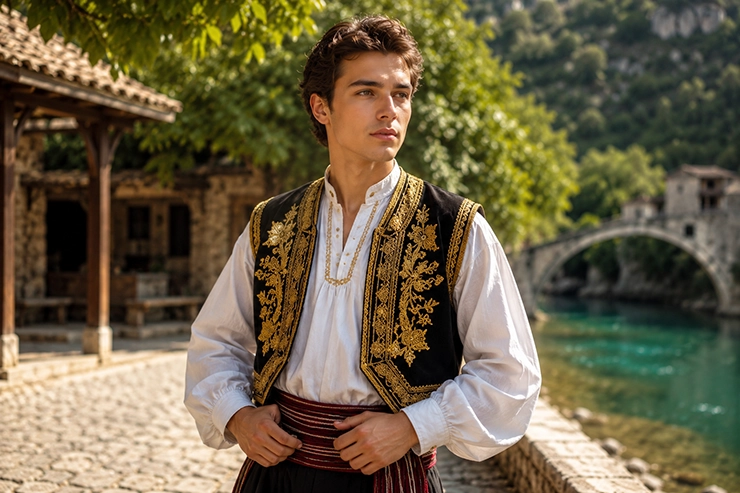
The jelek is a sleeveless vest traditionally worn over a white linen or cotton shirt. Crafted from wool, velvet, or fine cloth, it is often decorated with elaborate gold or silver embroidery that reflects the skill of local artisans. Wealthier families historically commissioned highly detailed handmade jeleks as symbols of social status and prosperity. Today, the garment continues to be an essential element of traditional Bosnian costumes worn during weddings, national celebrations, and cultural events.
Gunj
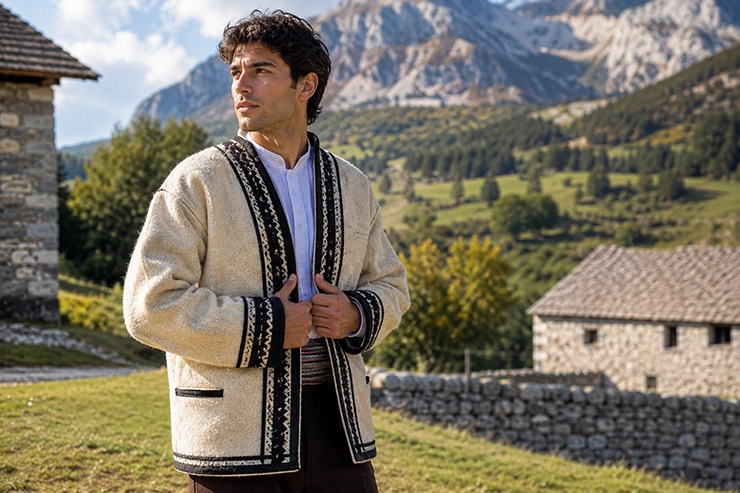
A gunj is a heavy woolen jacket designed to protect men from the cold mountain climate found throughout much of Bosnia and Herzegovina. Usually produced from thick homespun wool, it provides warmth while remaining durable enough for agricultural work and travel. Depending on the region, the jacket may feature simple embroidered edges or decorative stitching that distinguishes local styles. The gunj represents both practicality and traditional craftsmanship, reflecting rural life that shaped Bosnian history for centuries.
Fes
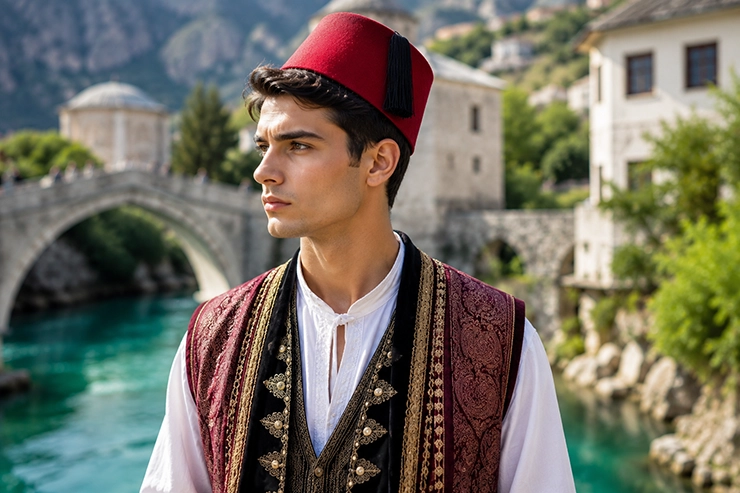
The fes is a cylindrical red felt cap that became widely adopted during the Ottoman period and remained an important part of traditional Bosnian men’s clothing. It is usually worn without a brim and often includes a black silk tassel hanging from the top. Although no longer common in everyday life, the fes continues to appear in ceremonial costumes, historical reenactments, and folklore ensembles. The distinctive headwear remains one of the strongest visual symbols connecting Bosnian clothing with its Ottoman cultural heritage.
Opanci
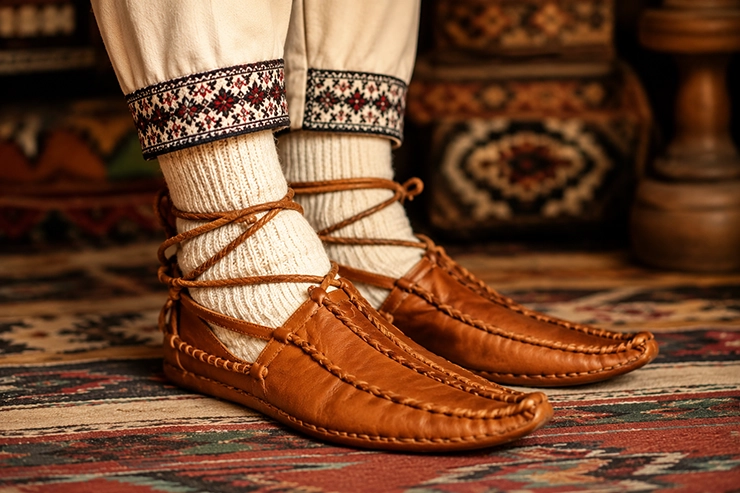
Opanci are traditional leather shoes handmade from natural leather using techniques passed down through generations. Designed to withstand rough terrain, they feature flexible soles and leather laces that secure the footwear around the foot. Regional variations exist throughout Bosnia and Herzegovina, with differences in stitching, toe shape, and decorative details reflecting local traditions. Opanci continue to be worn with authentic national costumes and remain an iconic element of Bosnian folk dress.
Women’s Traditional Clothing in Bosnia and Herzegovina
Košulja
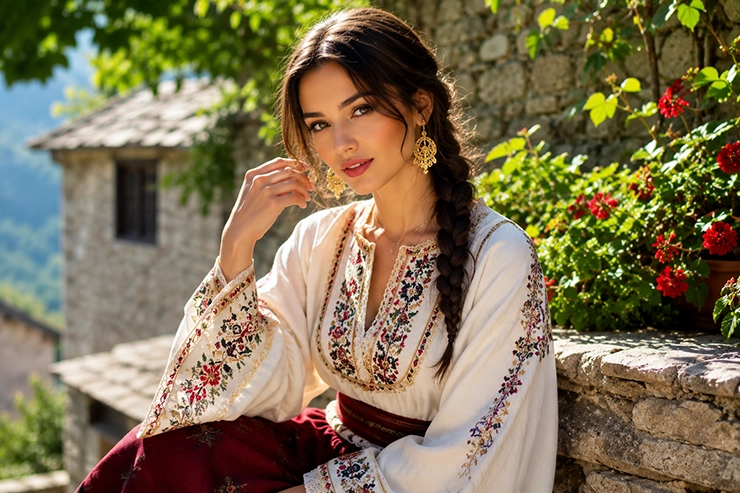
The traditional košulja is a long linen or cotton shirt that forms the foundation of women’s national costume. Handmade embroidery decorates the sleeves, cuffs, neckline, and chest, with motifs often inspired by flowers, vines, or geometric patterns unique to individual regions. The quality and complexity of the embroidery frequently reflected the maker’s skill and the family’s social standing. This elegant garment continues to be admired for its exceptional craftsmanship and timeless beauty.
Anterija
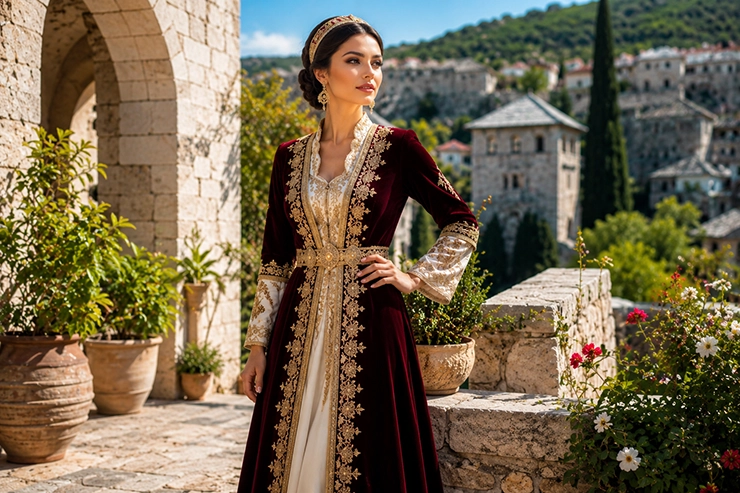
Anterija is a long decorative robe or dress traditionally worn over the basic shirt, particularly in urban areas influenced by Ottoman fashion. It is commonly made from luxurious fabrics such as silk, velvet, or fine wool and is richly embellished with embroidery, braid, or metallic thread. The fitted upper portion and flowing lower section create an elegant silhouette suitable for festive occasions. Anterija remains one of the most refined examples of Bosnia and Herzegovina’s traditional women’s clothing.
Jelek
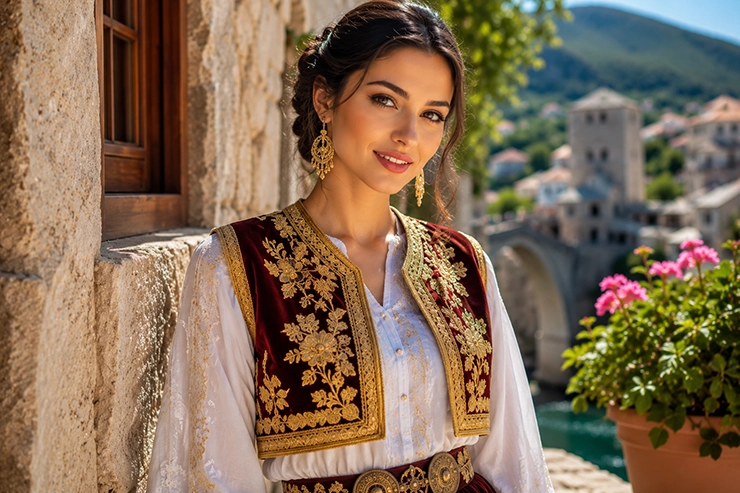
Women’s versions of the jelek are shorter decorative vests worn over embroidered shirts or dresses. They are often made from velvet or wool and adorned with intricate floral embroidery, gold thread, sequins, or colorful trim that enhances the overall costume. Every region developed distinctive decorative techniques, making each vest an expression of local identity. The garment adds both structure and elegance while highlighting the artistic traditions of Bosnian embroidery.
Dimije
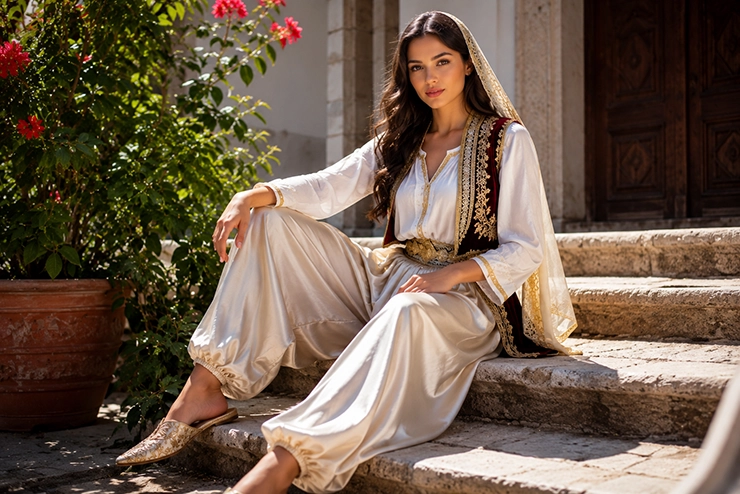
Dimije are wide, loose-fitting trousers traditionally worn by women, particularly in Bosniak communities. Their generous cut provides comfort and freedom of movement while creating graceful folds that distinguish the garment from Western-style trousers. They are commonly sewn from lightweight cotton, silk, or satin for festive occasions and paired with long tunics or robes. Dimije continue to symbolize the influence of Ottoman fashion on Bosnia and Herzegovina’s national dress while remaining an important feature of traditional celebrations.
Marama
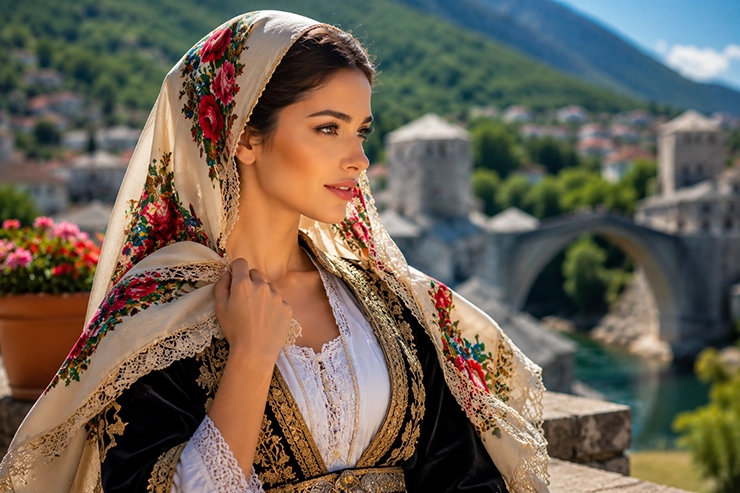
The marama is a traditional headscarf worn by women throughout Bosnia and Herzegovina in numerous regional styles. Made from cotton, silk, or fine woven fabrics, it can be embroidered, printed with floral motifs, or finished with delicate lace depending on local customs. Besides serving practical purposes, the scarf historically reflected marital status, regional identity, and family traditions through its color and method of tying. The marama remains an enduring cultural symbol and completes many authentic Bosnian national costumes.
Modern Clothing in Bosnia and Herzegovina
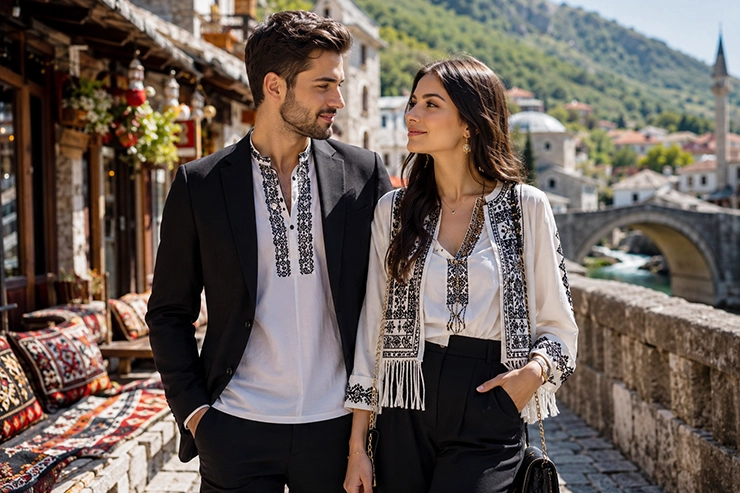
Modern clothing in Bosnia and Herzegovina combines international fashion trends with a deep appreciation for traditional heritage. Major cities such as Sarajevo, Banja Luka, Mostar, and Tuzla feature contemporary boutiques, European fashion brands, and local designers who create stylish collections for everyday wear. Traditional embroidery, woven patterns, and handcrafted accessories are increasingly incorporated into modern garments, allowing younger generations to celebrate their cultural identity through fashion. During national festivals, weddings, and folklore events, many people proudly wear authentic traditional clothing alongside contemporary outfits, ensuring that Bosnia and Herzegovina’s remarkable textile heritage continues to thrive in the twenty-first century.