
Alfajores
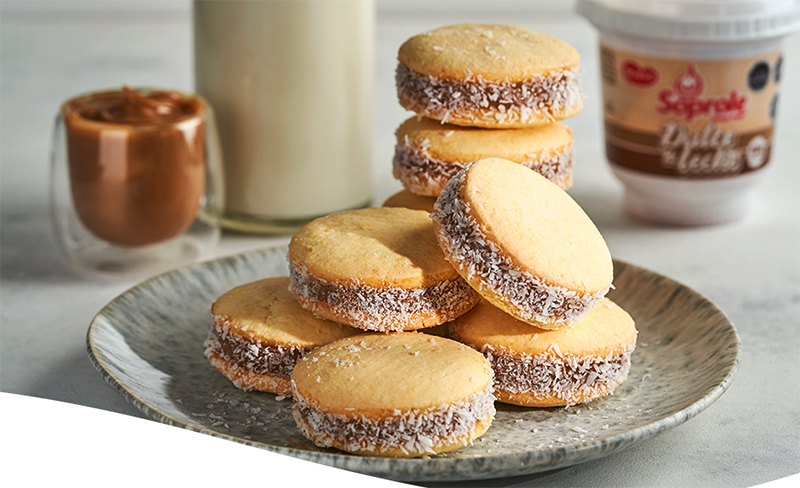
Alfajores are traditional sandwich cookies popular across Latin America, especially in Argentina, Peru, and Uruguay. These delicate treats typically consist of two crumbly, shortbread-like biscuits filled with creamy dulce de leche, often coated with powdered sugar, chocolate, or coconut flakes. The word “alfajor” is believed to come from the Arabic “al-hasú,” meaning “stuffed” or “filled,” tracing back to the Moorish influence in Spain during the Middle Ages. Spanish settlers introduced the concept to South America, where local ingredients and flavors shaped the modern version we know today.
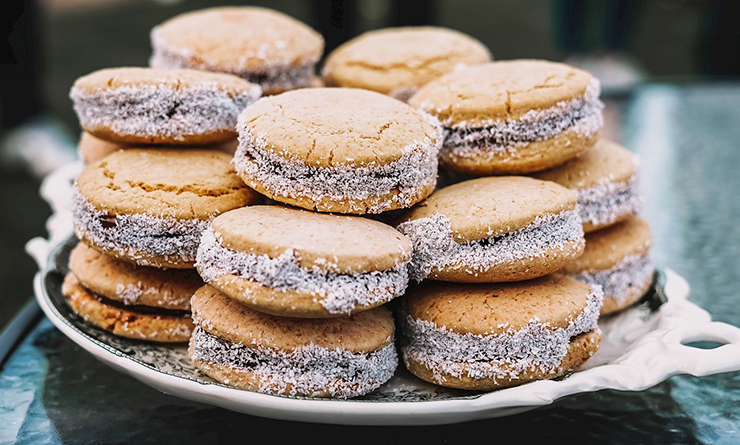
The taste of alfajores is rich, buttery, and slightly sweet, with the soft cookies melting in the mouth while the dulce de leche filling provides a smooth caramel-like sweetness. Variations may include chocolate, fruit jams, or nut-based fillings, enhancing their versatility. Alfajores are often enjoyed as a snack or dessert and are a staple during celebrations, holidays, or with afternoon tea and coffee.

To fully enjoy alfajores, they are best consumed fresh at room temperature. Pairing them with espresso, cappuccino, or a glass of warm milk enhances their flavor. In Argentina, it is common to have alfajores with mate, a traditional herbal tea, which balances their sweetness. While delicious, alfajores are not typically considered diet-friendly. They are high in sugar, butter, and carbohydrates, making them calorie-dense. However, smaller portions or homemade versions with healthier ingredients, such as almond flour or sugar-free fillings, can offer a lighter alternative for those seeking a guilt-free treat.