

Stroganina
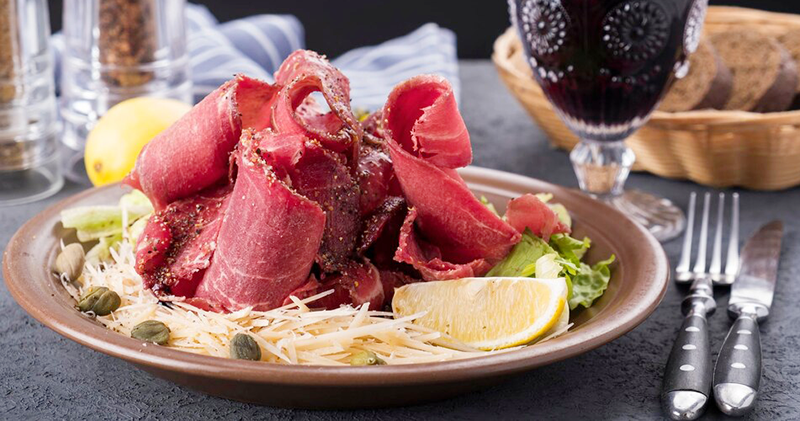
Stroganina is a traditional Siberian delicacy made from raw, frozen freshwater fish, most commonly omul, muksun, or nelma. This dish originates from the indigenous peoples of the Russian Arctic, such as the Yakuts and Evenks, who developed it as a practical and nutritious food suited for the extreme cold. The name “stroganina” comes from the Russian word “strogat”, meaning “to shave,” referring to the fine, thin slices of frozen fish that are cut just before serving. The method preserves the fish’s freshness and allows for safe consumption without cooking.
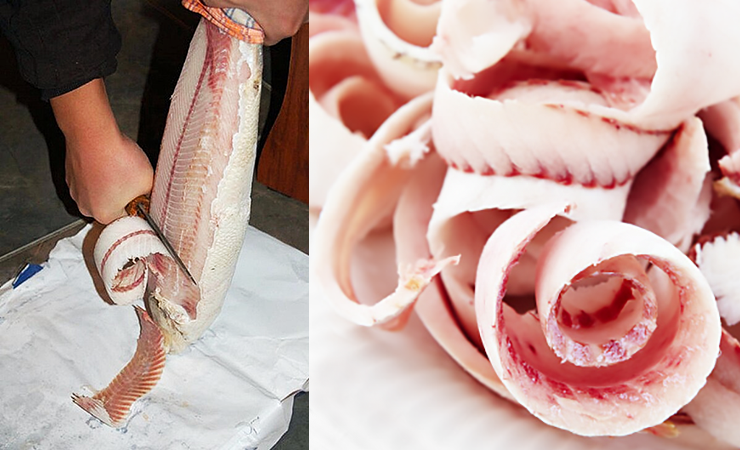
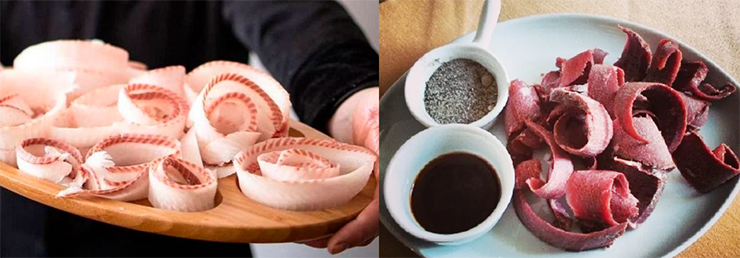
The taste of stroganina is pure, clean, and slightly sweet, with a delicate, melt-in-the-mouth texture. It is typically eaten immediately after slicing, often dipped into a simple mixture of salt and black pepper, or served with onion and a splash of vinegar. Vodka is the classic pairing, complementing the cold, firm fish with a sharp contrast and enhancing the experience.
Stroganina is relatively low in calories, high in protein, and contains healthy omega-3 fatty acids, making it a nutritious choice when consumed in moderation. It is not considered high-fat, especially when made from lean varieties of fish. Because it is raw, fresh sourcing and strict hygiene are essential for safety. In Russian cuisine, stroganina is often served as a festive starter or a symbol of hospitality in Arctic regions. Its minimalism, purity of flavor, and deep cultural roots continue to make it a revered and unique culinary experience.