

Crepes

Crêpes are thin French pancakes that originated in the Brittany region of northwestern France. The word “crêpe” comes from the Latin “crispa,” meaning curled or wrinkled, which describes the lacy edges that form when the batter cooks in a hot, lightly greased pan. Traditionally made from a simple batter of flour, eggs, milk, and a pinch of salt, crêpes can be either sweet or savory. The savory versions are usually filled with ham, cheese, eggs, or vegetables, while sweet crêpes are typically filled with sugar, fruit, jam, or chocolate.
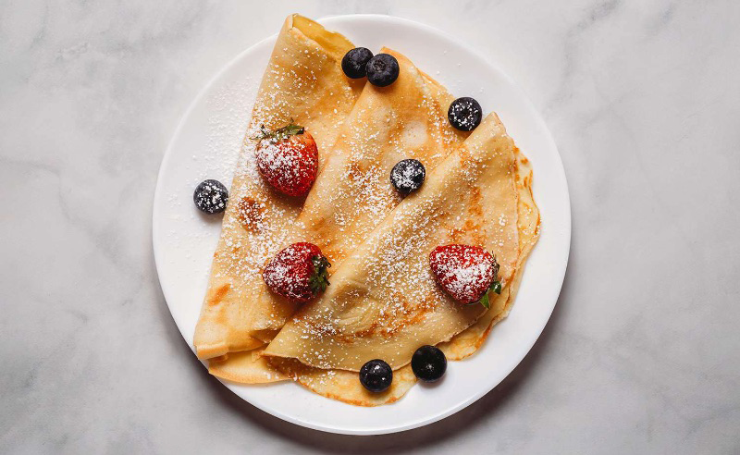
Though they might resemble Russian blini, there are key differences. Russian blini are usually thicker, use yeast or baking soda, and sometimes include fermented dairy like kefir or sour cream in the batter, giving them a tangy taste. Blini are often associated with religious or seasonal festivals, especially Maslenitsa, while crêpes have a secular culinary role and are featured at events like Candlemas (La Chandeleur), where it’s customary to flip crêpes while holding a coin for good luck.

Crêpes are typically eaten rolled or folded into triangles and served with toppings or fillings. In France, crêperies specialize in these treats, often offering an extensive menu of both sweet and savory varieties. One of the most famous crêpe dishes is Crêpe Suzette, flambéed with orange liqueur and butter.