

Jack Howard-Potter
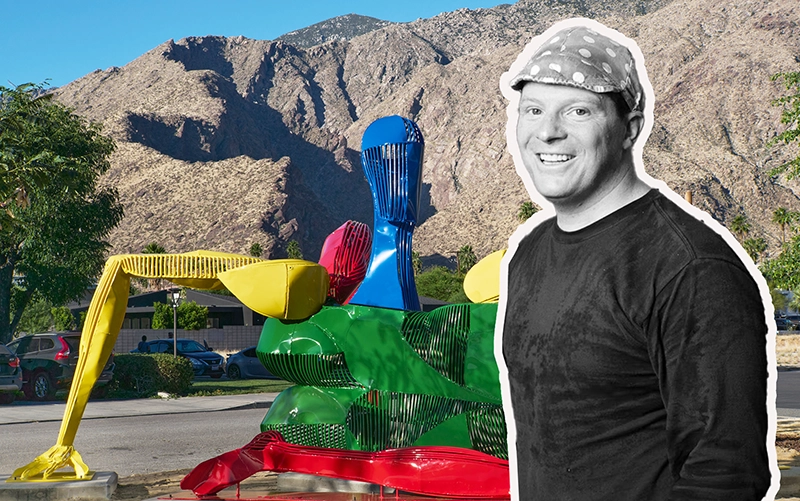
Our interview with Jack Howard-Potter, a New York–based sculptor and public artist whose work can be found in cities and public spaces across the United States. Known for creating large-scale installations that connect art, place, and fashion, he has built a career shaping memorable public environments, including projects at prominent cultural and civic sites.
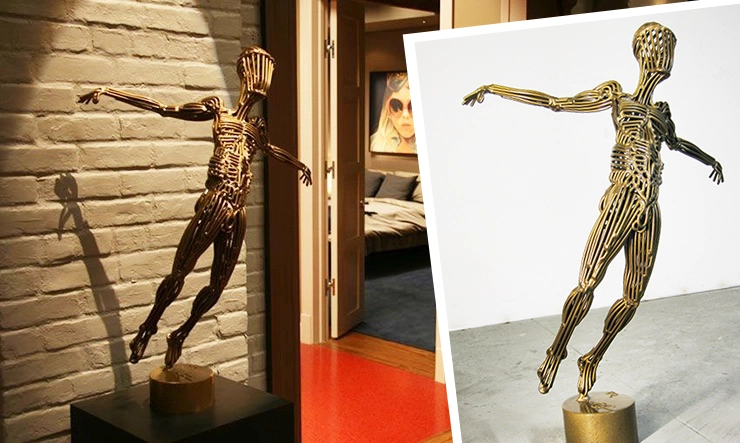
The Fashiongton Post: Jack, let’s start with the sculpture everyone still talks about—“From Behind”. How did it end up in “Gossip Girl”? Did the show’s production team approach you directly, or did someone else make the connection?
Jack Howard-Potter: The set designer saw one of my works in Williamsburg Brooklyn and approached me about loaning a work for the show. She selected a lovely gold figure called “From Behind” and placed it in Chuck Bass’ apartment in The Empire hotel. After one season, the sculpture became such a fixture in the show, with characters talking over it at times, that it stayed there for four seasons.
F.P.: The sculpture wasn’t sold to the production, but rented instead. Is that standard practice in the film and television world, or were you particularly reluctant to part with the piece at the time?
J.H.P.: The standard practice is for them to rent sculpture for the show. I was thrilled for the piece to have the exposure the show provided, and so was happy to rent it to them each year. I was not even sure it would be on set for more than one season, but they kept coming back year after year.
F.P.: Perhaps the question fashion insiders are most curious about: what did “Gossip Girl” actually pay to feature “From Behind”, and what was the eventual sale price when the sculpture finally found its permanent owner?
J.H.P.: I am not at liberty to discuss this. Works of this size usually sell for around $10,000.
F.P.: Where is “From Behind” today? Does it live in a collector’s penthouse, the home of a die-hard Gossip Girl fan, or somewhere even more unexpected?
J.H.P.: The sculpture was eventually sold to a collector in Germany. I have no idea where it is displayed but let’s assume it is in a penthouse apartment of a hotel owner! I don’t really know where a lot of my small sculptures are displayed, people purchase them and bring them home and I usually never see them again!
F.P.: Do rich people and powerful people buy art for different reasons?
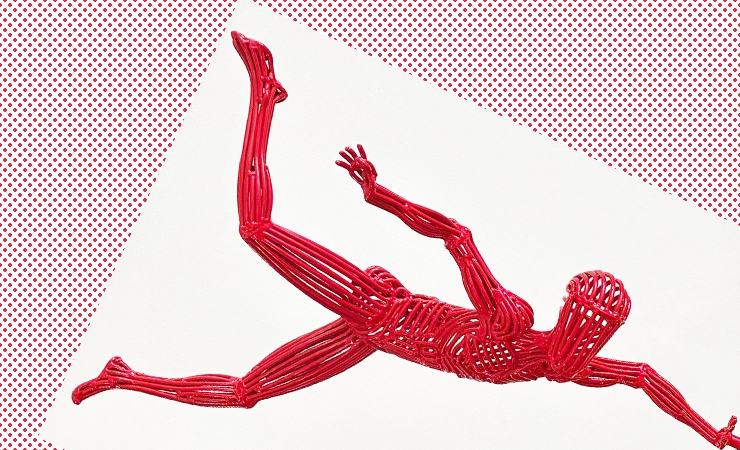
J.H.P.: My hope is that people buy art that they want to live with and see every day. Displaying wonderful works of art by other painters, photographers and sculptors in my home allows me to have a continued relationship with a piece of art. Do I look at it when I am sad, happy, tired or just relaxing? Does it look different depending on my mood? Does the morning sun hit it and illuminate it in some unique way? These are the conversations I hope people have with the art that lives in their home.
F.P.: Is there a work of yours that you wish nobody had ever bought because you still wanted to keep it for yourself?
J.H.P.: There are certain sculptures I cannot part with. They either represent a shift in my focus, visual style, or just that I like them a lot. It is not meant as a way to keep it from others but ultimately, I make sculpture because it is an idea in my head and I want to see it in the real world. If nobody ever looked at my work again I would still make them, so I can sit back and see, in reality, the dreams in my head.
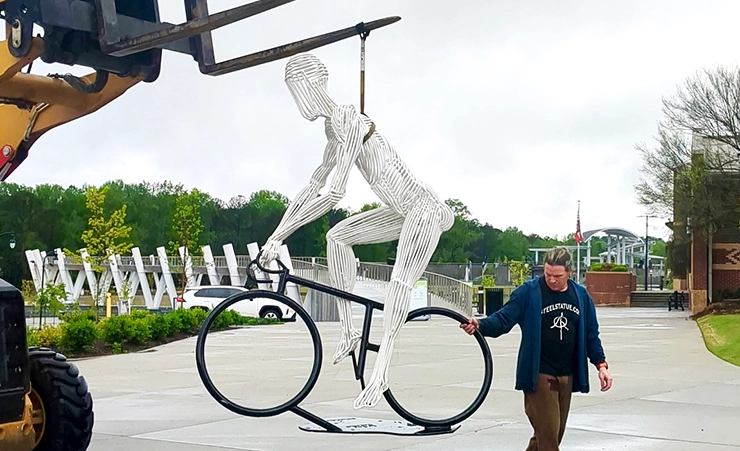
F.P.: Steel has become your signature material. What originally attracted you to it, and do you ever see yourself creating sculptures in silver or gold—or is steel simply impossible to replace?
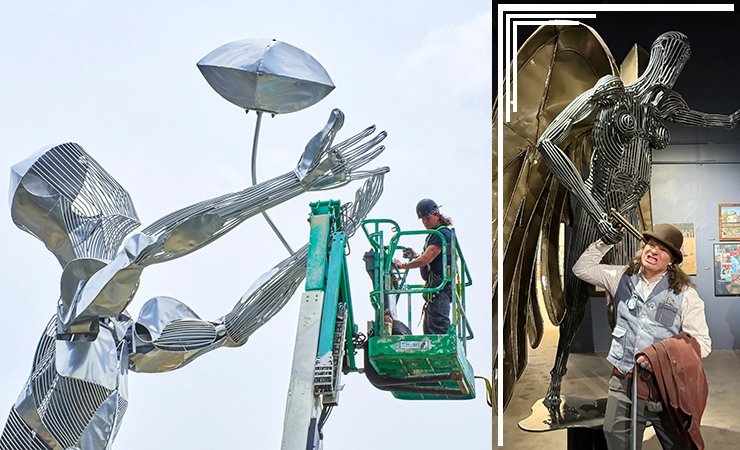
J.H.P.: The very first time I welded in 1996 I knew I had found the material that I was going to pursue for the rest of my life. It was this kind of sorcery where hard steel is liquified instantaneously and then is ultimately malleable and editable only to harden instantly when the welding is over. It was primordial and visceral, and I knew it was a material that would stand the test of time. I have experimented with other metals and have been making stainless steel jewelry for about two years. It provides a seemingly instantaneous outlet for my work. I get to expand my visual language in a new way and make something in a day, whereas my big projects can take 6 months, completing a ring seems quick!
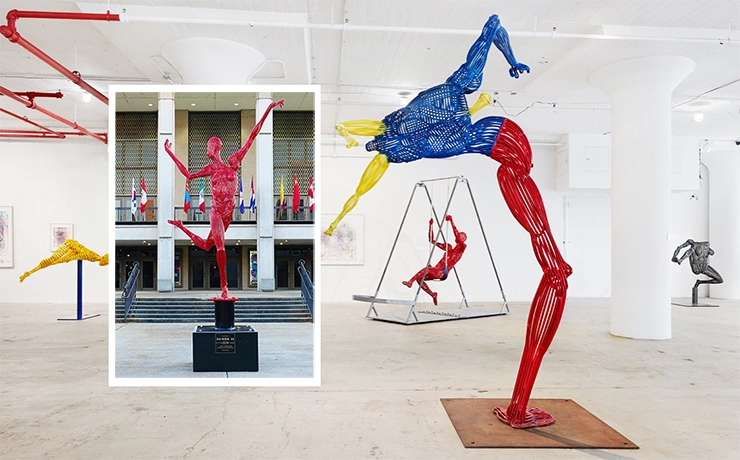
F.P.: Which would bother you more: a sculpture being ignored or misunderstood?
J.H.P.: Ignored. If my work is misunderstood, at least people are looking at it. I always say that whether a person likes my work or hates it is irrelevant, as long as they take the time to walk around it a form an opinion I have done my job. Art is meant to ask questions that a viewer answers. It contains some truth that the viewer is invited to unveil. A really good piece of art will do a better job of inviting people to look at it and spend time with it, hopefully revisiting it as a people change over time.
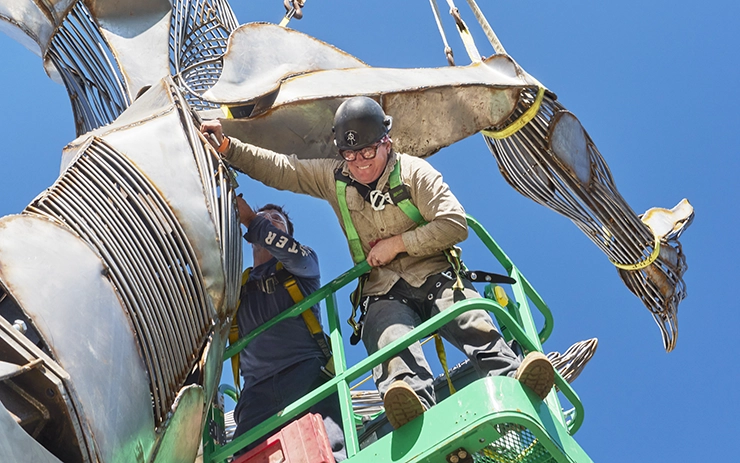
F.P.: What piece of clothing best represents your artistic philosophy?
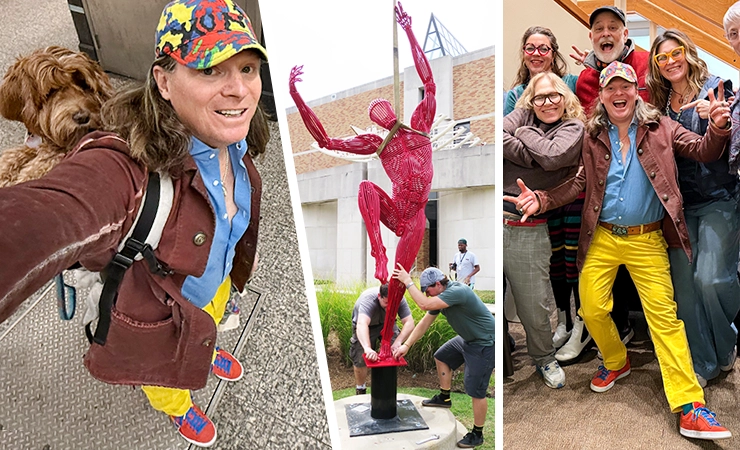
J.H.P.: A welding cap. Especially the ones that “Kromer” made in the seventies. They are utilitarian, well made, super colorful and last a hell of a long time. That or maybe a huge silver ring or necklace that I have made!
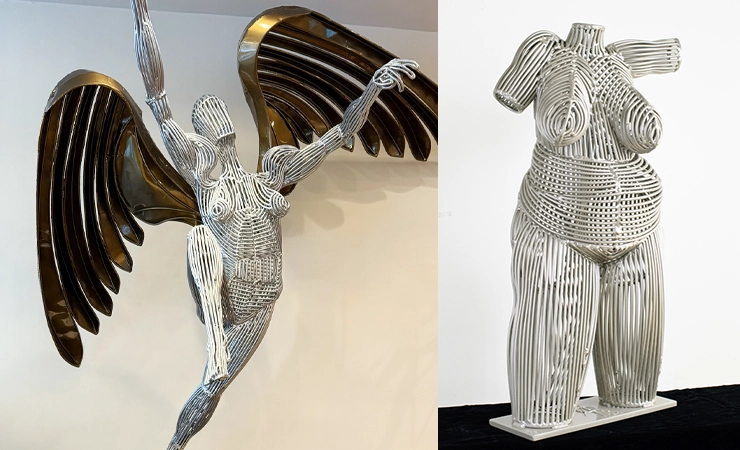
F.P.: Traditionally, your piece of advice to The Fashiongton Post readers?
J.H.P.: Totally embrace your own style. Don’t try to emulate someone else but make decisions that you are comfortable with that take some kind of risk. When I am wearing a ton of color, a welding hat, huge amber rings, necklaces and bright red shoes I feel good and love how I look. It is wholly of my own making and the clothes I wear are an extension of my sculpture, colorful, fun and durable. Standing out in a crowd of beige, dark blue and black is my favorite activity!
• Official sites of Jack Howard-Potter:
www.steelstatue.com
www.steelstatuejewelry.com