

Salo
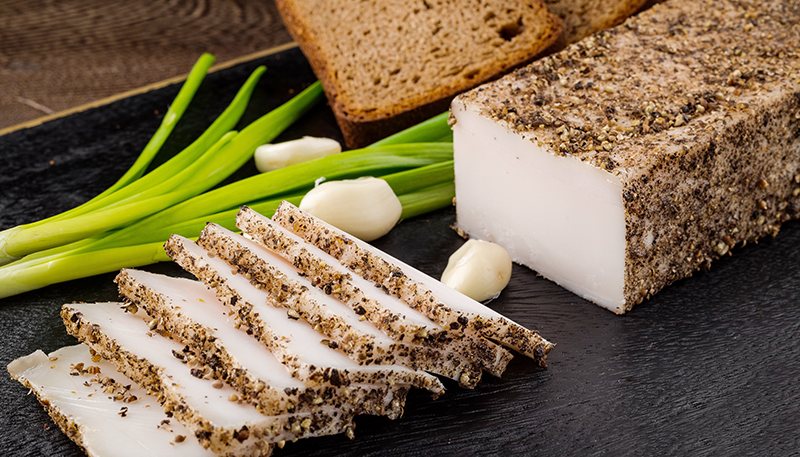
Salo is a traditional Eastern European delicacy made from cured slabs of pork fatback, often with or without skin. It originated centuries ago in Slavic regions, particularly in Ukraine, where it remains a national staple, though it’s also deeply rooted in Russian, Polish, and Belarusian cuisines. Historically, salo served as an accessible and energy-rich food for peasants and soldiers, thanks to its long shelf life and high caloric content.
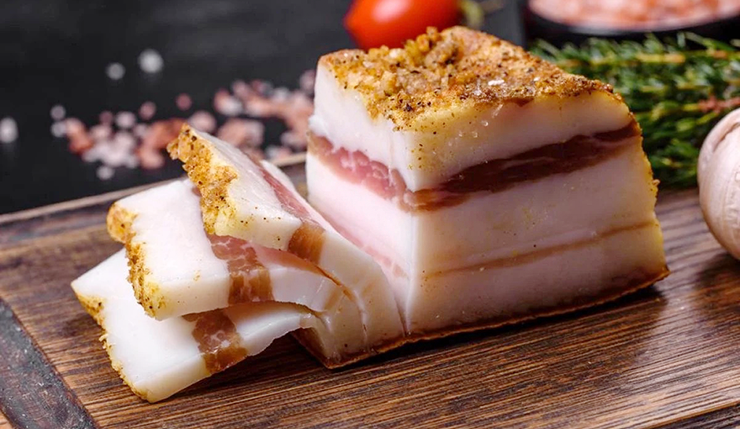
The preparation of salo involves curing the pork fat in coarse salt, sometimes with garlic, pepper, paprika, bay leaves, or other spices. It can be dry-cured, brined, or smoked, depending on regional preferences. After curing, it’s typically stored in a cool place and can be eaten raw, smoked, or lightly cooked.
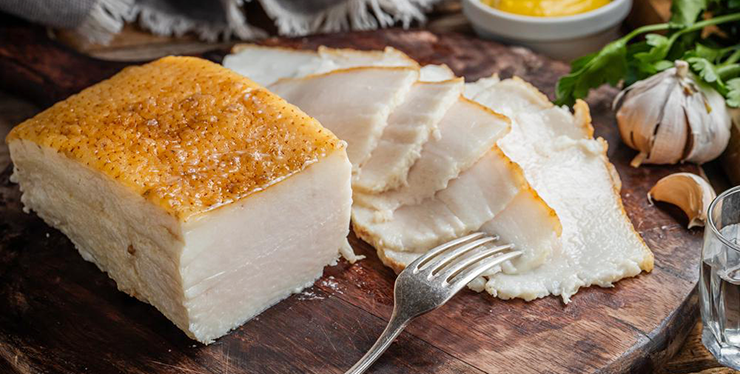
Salo has a rich, creamy texture and a mild, savory flavor that intensifies with aging. Good salo should melt slightly at room temperature and have a clean taste without greasiness. It’s often sliced thinly and eaten on rye bread with garlic, onions, or pickles, and traditionally accompanied by a shot of vodka. It may also be fried with eggs or used as a cooking fat.
Whether served at rustic tables or festive feasts, salo holds cultural significance and nostalgia for many Eastern Europeans. Despite its simplicity, it’s considered a delicacy that symbolizes hospitality, resilience, and tradition.