Complete Guide to Namibian Clothing
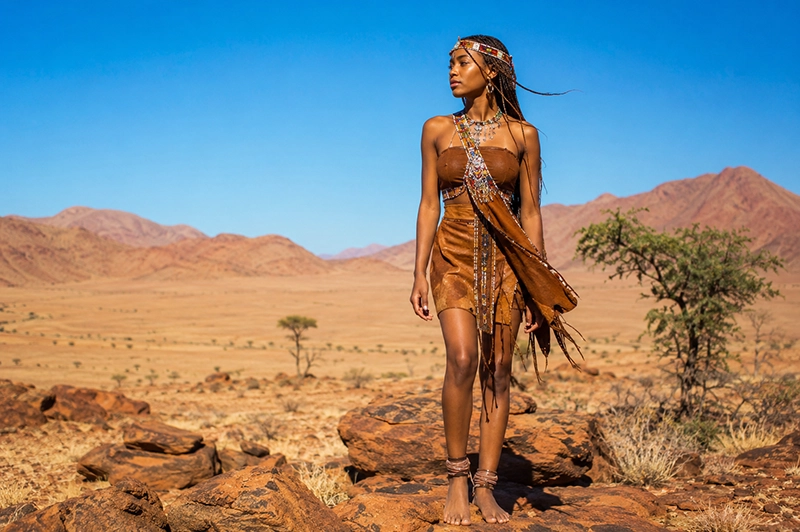
Namibia is a country where fashion reflects centuries of cultural heritage, environmental adaptation, and ethnic diversity. Home to communities such as the Herero, Himba, Ovambo, Damara, Nama, San, and Kavango peoples, Namibia showcases a remarkable variety of traditional garments that continue to play an important role in ceremonies, festivals, and everyday cultural life. Traditional Namibian clothing is often handmade, featuring natural materials, vibrant fabrics, leather, beads, and symbolic accessories that express identity and social status. While modern fashion has become common in urban centers, traditional attire remains a treasured symbol of national pride and cultural continuity.
Men’s Traditional Clothing in Namibia
Ohorokova
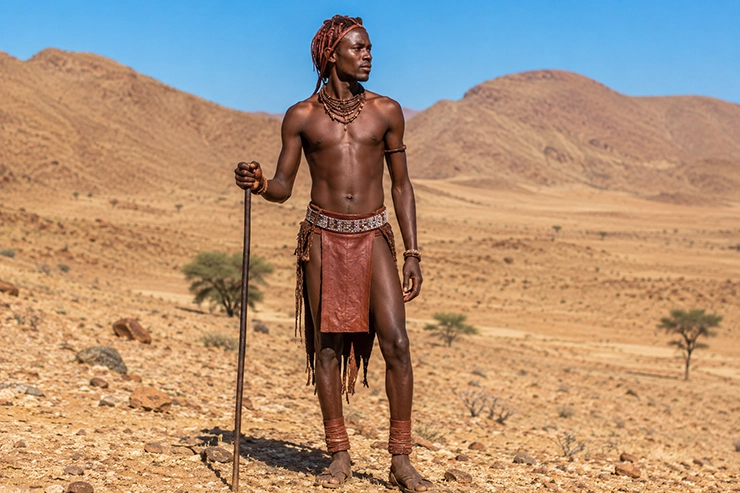
The Ohorokova is the traditional leather loin covering worn by Himba men and is one of the most recognizable pieces of Namibian clothing. Crafted from softened animal hide, it is designed to provide comfort in Namibia’s hot and arid climate while allowing freedom of movement during daily activities such as cattle herding. Himba men often treat the leather with natural fats and red ochre, which helps preserve the material and gives it a distinctive reddish appearance. Although modern clothing is increasingly available, the Ohorokova remains an important symbol of Himba identity and cultural heritage.
Ondele
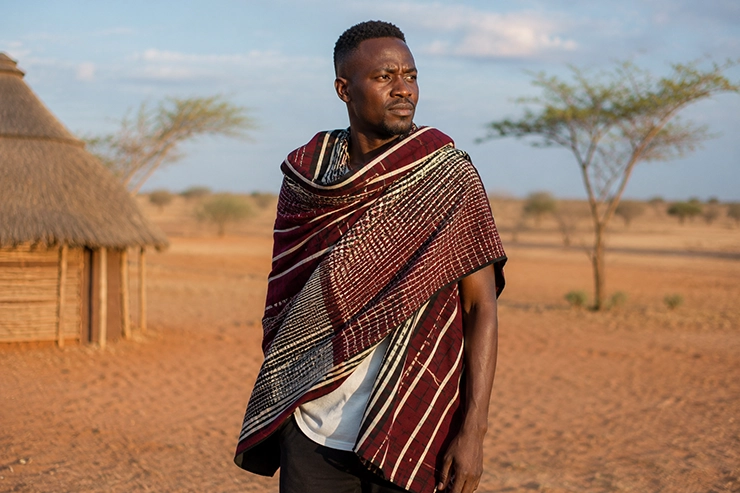
The Ondele is a traditional shawl or wrap commonly worn by Ovambo men during ceremonies and important community gatherings. Usually made from woven cotton or patterned fabric, it is draped over the shoulders or wrapped around the upper body. The garment represents dignity and respect, particularly during weddings, harvest celebrations, and traditional leadership events. Today, many Ovambo men continue wearing the Ondele during cultural festivals while pairing it with contemporary clothing.
Kaross
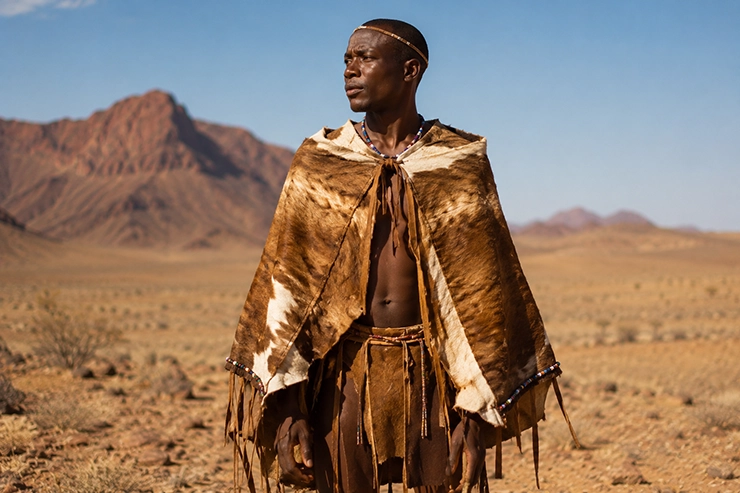
The Kaross is a traditional animal-skin cloak historically worn by Nama, Damara, and San men. Made from carefully prepared hides of antelope, springbok, or other game animals, it provides warmth during cool desert nights while serving as a practical travel garment. Skilled artisans decorate some Kaross cloaks with stitching, leather tassels, or beadwork that reflects regional traditions. Although largely reserved for ceremonial occasions today, the Kaross remains one of Namibia’s most iconic traditional garments.
Leather Apron
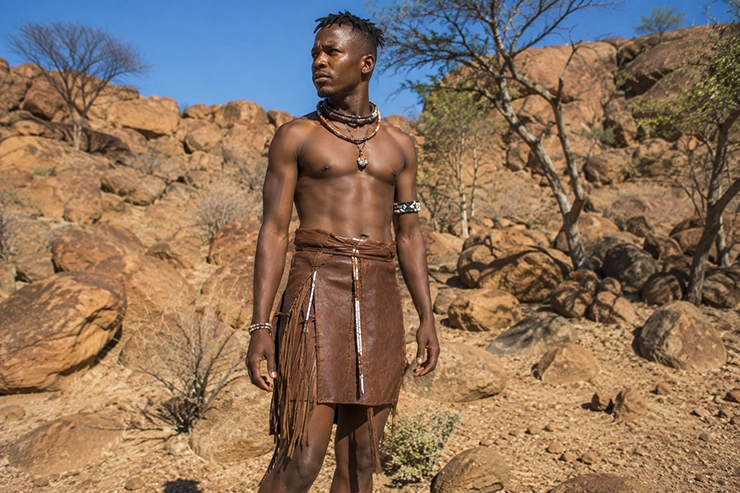
The Leather Apron is another traditional garment widely associated with pastoral communities, particularly among Himba men. Worn around the waist, it serves both practical and ceremonial purposes, protecting the wearer while working with livestock and marking cultural identity. The apron is often handcrafted from goat or calf leather and may be decorated with simple leather strips or bead accents. During cultural festivals and heritage celebrations, it continues to represent the resilience of Namibia’s indigenous traditions.
Beaded Headband
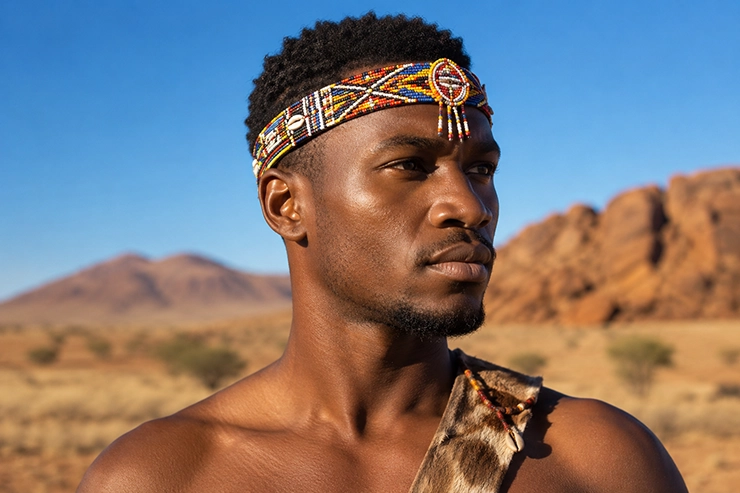
The Beaded Headband is an important traditional accessory worn by many Namibian men alongside ceremonial clothing. Handmade using colorful glass beads, leather, shells, or natural fibers, it signifies maturity, community affiliation, or social status depending on the ethnic group. Some headbands are reserved for important rites of passage, while others are worn during dances and cultural celebrations. Their intricate craftsmanship highlights the artistic skills passed down through generations of Namibian artisans.
Women’s Traditional Clothing in Namibia
Otjikaiva Dress
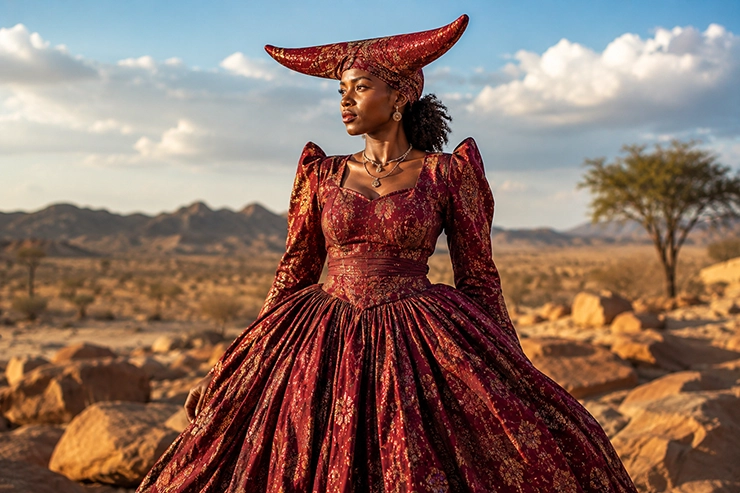
The Otjikaiva Dress is the famous traditional gown worn by Herero women and is among Namibia’s most celebrated national garments. Distinguished by its full Victorian-inspired skirt, fitted bodice, long sleeves, and dramatic horn-shaped headdress, the dress reflects a unique blend of history and cultural adaptation. Herero women wear the Otjikaiva during weddings, church services, national celebrations, and community gatherings with great pride. The garment has become an enduring symbol of resilience, identity, and the preservation of Herero culture.
Erembe Headdress
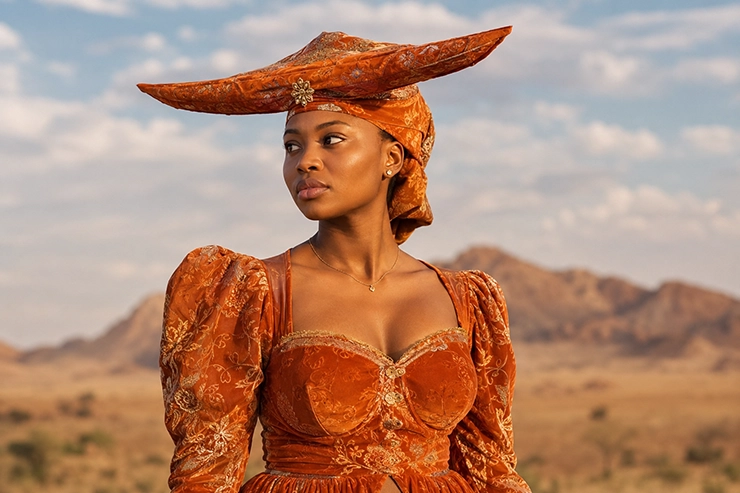
The Erembe is the distinctive horn-shaped headdress worn with the Herero dress. Carefully constructed from fabric and stiff internal supports, its shape honors the importance of cattle within Herero society, as it resembles the horns of a cow. The headdress is matched to the dress in color and fabric, creating an elegant and recognizable appearance. It is considered an essential part of formal Herero traditional attire and carries deep cultural significance.
Ohorokova Skirt
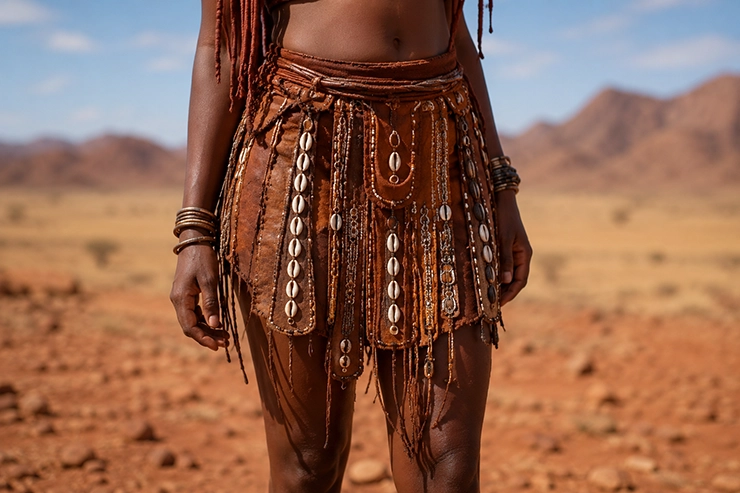
The Ohorokova Skirt is a traditional leather skirt worn by Himba women. Handmade from softened goatskin or calfskin, it is decorated with leather strips, shells, iron ornaments, and intricate beadwork that often indicate age, marital status, or family background. Himba women regularly apply a mixture of butterfat and red ochre to both their skin and leather garments, creating the famous reddish appearance associated with the community. The skirt remains central to Himba identity and continues to be worn in daily life within many traditional settlements.
Ondeva Leather Belt
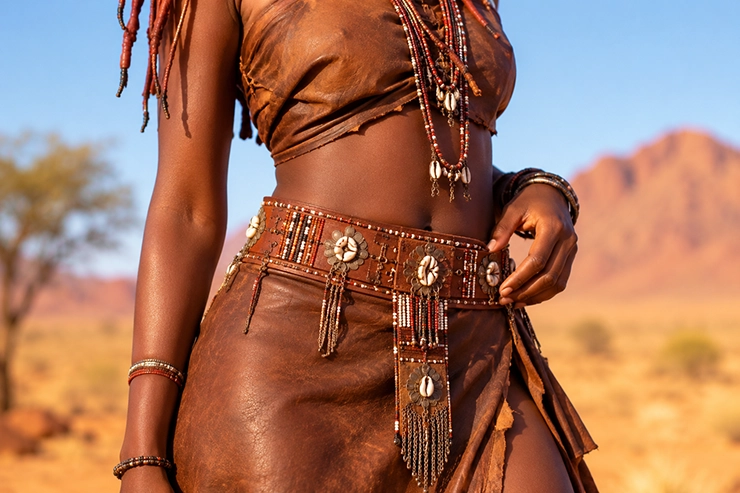
The Ondeva Leather Belt is a decorative waist garment traditionally worn by Himba women over the leather skirt. Crafted from durable leather and adorned with beads, shells, and metal ornaments, it helps secure clothing while also serving as an important decorative accessory. The style and decoration may reflect a woman’s stage of life or family traditions. During ceremonies and festivals, the belt enhances the beauty and symbolism of the complete traditional outfit.
Beaded Necklaces
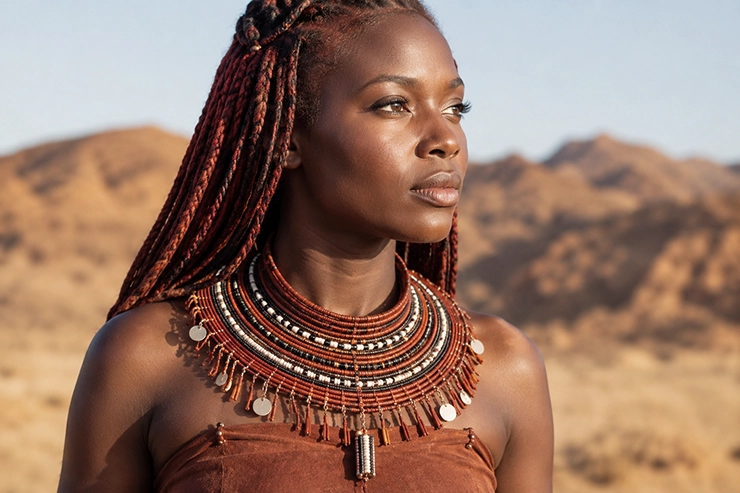
Beaded Necklaces are an essential component of traditional women’s clothing throughout many Namibian communities, especially among the Himba, Herero, and Kavango peoples. These handcrafted necklaces combine colorful beads, shells, leather, copper, and iron to create elaborate designs with cultural meaning. Different combinations of materials and patterns may represent beauty, adulthood, family connections, or social standing. Passed down through generations, these necklaces remain treasured expressions of Namibian craftsmanship and heritage.
Modern Clothing in Namibia
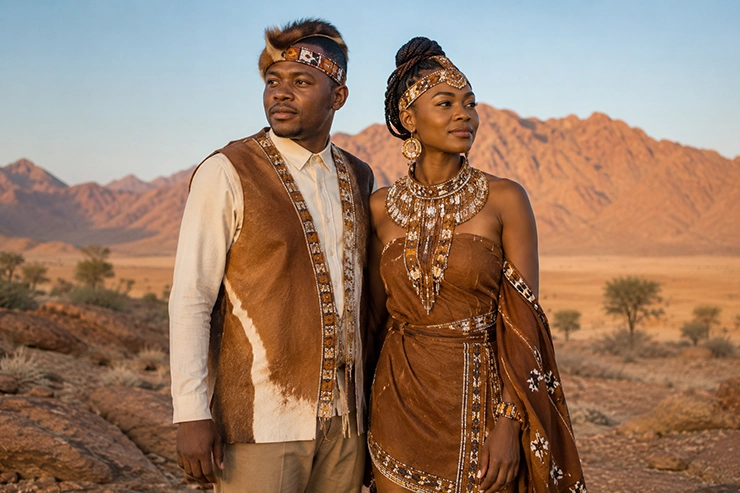
Modern clothing in Namibia combines international fashion trends with strong respect for traditional cultural identity. In cities such as Windhoek, Swakopmund, and Walvis Bay, people commonly wear jeans, dresses, business suits, sportswear, and globally recognized fashion brands for everyday life. Traditional garments continue to be proudly worn during weddings, religious ceremonies, cultural festivals, Independence Day celebrations, and tourism events, allowing younger generations to stay connected with their heritage. This balance between contemporary style and historic dress traditions makes Namibian fashion one of the most culturally distinctive and visually fascinating in Southern Africa.